
The role of a property manager has undergone a sophisticated evolution, transitioning from a mere administrative function to a specialized discipline that integrates hospitality, financial stewardship, legal compliance, and technological optimization. In the contemporary real estate ecosystem, particularly within high-stakes markets such as Dar es Salaam’s Masaki and Oysterbay or global investment hubs, a property manager serves as the essential bridge between property owners and tenants, ensuring that the intrinsic and market value of real estate assets is not only preserved but actively enhanced. This analysis provides an exhaustive exploration of the property management profession, examining its operational architecture, the economic trade-offs between professional and self-management, the rigorous legal frameworks governing the industry in Tanzania, and the transformative impact of emerging technologies.
The Operational Architecture of Professional Property Management
At its fundamental level, property management is the professional oversight of residential, commercial, or industrial real estate by a third-party entity on behalf of an owner. The primary objective is to maintain the property’s value while generating a consistent income stream for the investor. This role is multifaceted, requiring a blend of interpersonal skills, organizational capabilities, and a comprehensive understanding of property management principles.
The Property Manager as a Strategic Intermediary
The property manager functions as the central point of contact, effectively buffering the owner from the daily complexities and potential emotional frictions inherent in tenant relations. By acting as a local presence for out-of-town owners, the manager provides “eyes and ears” on the ground, identifying issues before they escalate into costly liabilities. In the luxury segment, such as the apartments managed by Rent 5 Star Apartments, this intermediary role takes on a hospitality-centric dimension, where the manager is tasked with providing an exceptional level of service, including personalized tenant relations and concierge-style support.
Detailed Daily Operations and Time Allocation
The daily life of a property manager is a dynamic sequence of task prioritization and crisis management. The operational cycle typically begins with a rigorous assessment of emails and messages to address maintenance requests or owner inquiries. A typical day might involve:
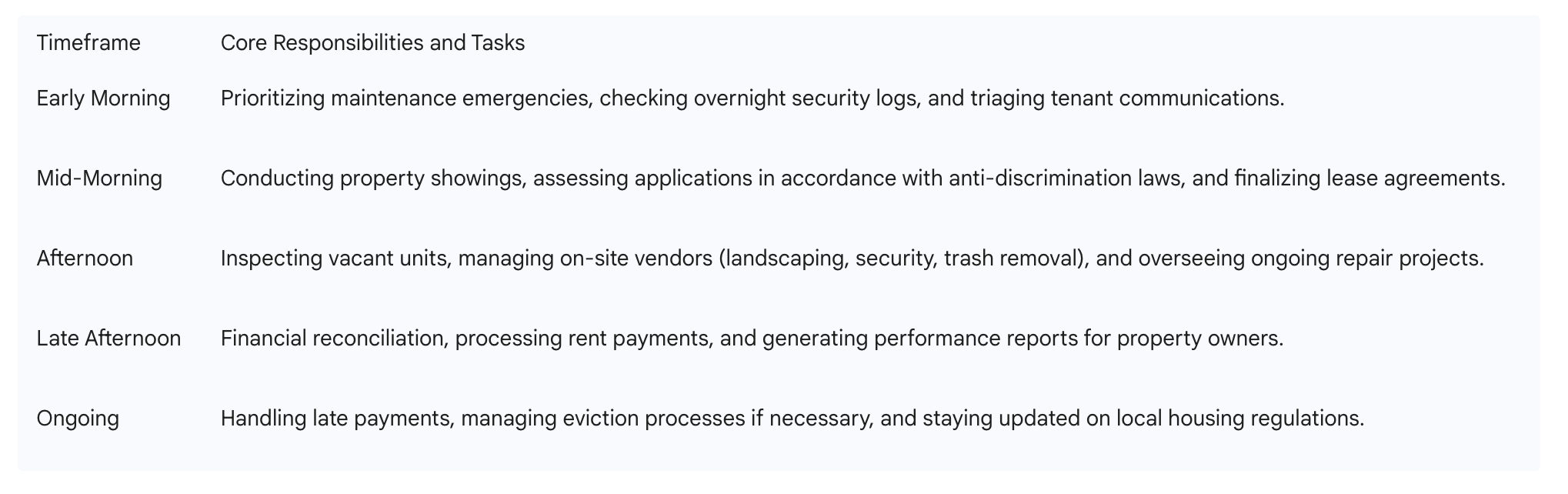
This structured approach ensures that the property runs like a “well-oiled machine,” where tenant satisfaction is balanced against the owner’s financial objectives.
The Economic Dynamics of Management Models: Self-Management versus Professional Oversight
“Real estate investors often grapple with the decision to manage properties themselves or to hire a professional firm. This decision is rarely just about the management fee; it is an evaluation of time value, opportunity cost, and risk mitigation.” – Michael Kimei
The Hidden Costs of the “DIY” Landlord
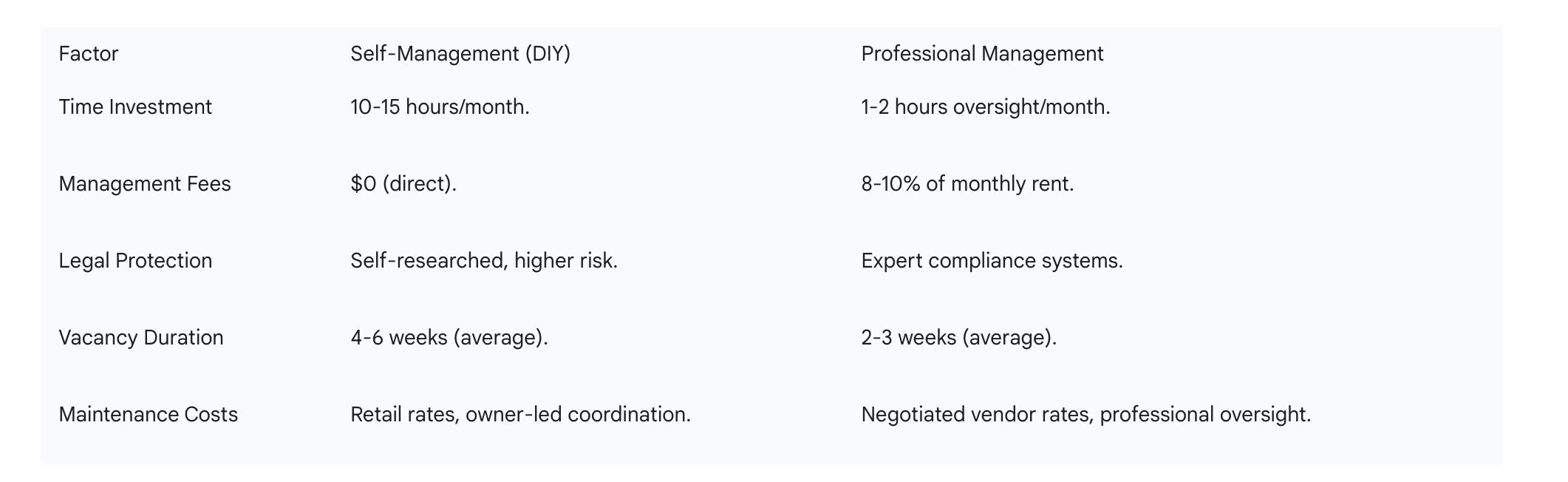
Self-management is often perceived as a cost-saving measure, as it eliminates the standard 8% to 10% management fee. However, research indicates that the “cost” of self-management is frequently underestimated. In competitive markets like Dar Es Salaam, self-managing a rental property typically requires 10 to 15 hours of an owner’s time each month. If an investor’s time is valued at $50 per hour, the labor cost alone reaches $750 monthly, which may exceed the professional management fee for a high-end unit.
Furthermore, professional managers often possess the scale and infrastructure to reduce other operational costs. They can negotiate lower advertising rates and have established relationships with contractors, securing better pricing and faster service than an individual homeowner could achieve.
Risk Mitigation and Legal Consequences
One of the most significant advantages of professional management is the mitigation of legal risk. Professional property managers are local experts who stay current with complex landlord-tenant laws, fair housing regulations, and eviction procedures. In regions with tenant-protective laws, such as Kinondoni Municipal of Dar es salaam,or major urban centers in Tanzania, a single mistake in a security deposit dispute or a rent increase notice can lead to expensive legal problems or failed evictions, with costs ranging from $3,000 to $10,000.
Professional firms utilize standardized, legally vetted lease agreements and screening methods, protecting owners from discrimination claims. They also act as a professional buffer during evictions, ensuring that the process is handled according to strict legal guidelines and reducing the stress on the property owner.
Maximizing Revenue and Reducing Vacancy
A skilled property manager assists in determining the optimal rental rate by balancing maximum monthly revenue with a low vacancy rate. Professional management firms often lease properties two to three weeks faster than self-managing landlords due to their broader marketing reach and ability to respond to inquiries within the hour. In a high-end market where monthly rent is substantial, every week of vacancy represents a significant financial loss that can often justify an entire year of management fees.
The Legal and Regulatory Landscape of Property Management in Tanzania
Managing property in Tanzania, specifically in commercial hubs like Dar es Salaam or Arusha, requires a rigorous understanding of the local statutory framework. The industry has shifted toward greater formalization following the introduction of key legislation and digital initiatives.
The Real Estate Agents Act 2020
The Real Estate Agents Act 2020 is the primary legislation governing the conduct of property professionals in Tanzania. It provides a formal licensing requirement for all persons exercising the activity of a “property broker,” “property consultant,” “real estate agent,” or “branch manager”. The act defines “property management” as the overseeing of real property owned by another person to ensure proper administration and preservation of value.
Licensing and Eligibility Criteria
To practice as a real estate agent or property manager, individuals must be registered in the official Register of Real Estate Agents. Eligibility requirements include:
-
A minimum age of 18 years.
-
Possession of prescribed qualifications, including certificates in real estate covering legal, financial, technical, and communication issues.
-
Submission of a completed Anti-Money Laundering and Counter-Terrorism Financing (AML/CFT/PF) risk assessment questionnaire.
-
A clean criminal record, specifically regarding offences involving fraud, dishonesty, or violence in the preceding ten years.
The Licensing Board, established under this act, oversees the registration process and ensures that practitioners adhere to high ethical standards and professional conduct.
Land Ownership and the Derivative Right
In Tanzania, all land is publicly owned and vested in the President as a trustee for all citizens. This unique structure means that individuals and entities do not “own” land in the absolute sense but hold “Rights of Occupancy”.
For foreign investors, land acquisition is restricted to investment purposes and is facilitated through a “derivative right” granted by the government under the Tanzania Investment Act. This right is typically administered through the Tanzania Investment Centre (TIC), which maintains a land bank specifically for foreign investors. These derivative rights can be mortgaged as security for financing, subject to written approval by the Commissioner for Lands.
Business Registration and Taxation
Any entity providing property management services must be legally registered with the Business Registration and Licensing Agency (BRELA). This involves registering a company or business name and obtaining a Class “A” or Class “B” business license, depending on the scale of the operation.
Tax compliance is a critical component of Tanzanian property management. Several statutory charges apply:
-
Stamp Duty: 1% of the property’s market value upon purchase.
-
Registration Fees: 0.25% under the Land Registration Act.
-
Capital Gains Tax: 3% for developed land and 10% for undeveloped land, payable by the seller.
-
Property Tax: An annual tax payable to local authorities based on property use and location.
-
Withholding Tax on Rent: Landlords are generally subject to a 10% withholding tax on rental income, a factor that significantly impacts net yields.
Technology and Innovation in 2025/2026 Property Management
The global property management software market is expected to grow at a CAGR of 9.9% through 2032, reaching a value of USD 54.16 billion. This growth is fueled by the rapid integration of Artificial Intelligence (AI) and the Internet of Things (IoT) into daily operations.
AI-Driven Automation for Operational Efficiency
In 2025, AI has moved beyond pilot projects to become the backbone of efficient management. Professional property managers utilize AI “copilots” to triage and reply to high volumes of guest inquiries instantly. AI tools also analyze historical data to predict equipment failures, allowing for proactive maintenance before issues become costly emergencies.
Furthermore, pricing teams apply AI algorithms to demand signals, adjusting rental rates and length-of-stay strategies in real-time to optimize revenue.
IoT and Privacy-Preserving Visibility
IoT sensors provide property managers with critical data about the physical environment without compromising tenant privacy. These tools are essential for risk mitigation and cost control:
-
Leak Detection: Sensors can detect moisture and automatically shut off water valves, preventing claims that average over $12,000 per incident.
The Software Ecosystem for High-End Portfolios
Modern property managers utilize “all-in-one” cloud platforms to consolidate operations. These systems offer mobile-friendly interfaces, automated accounting, and seamless tenant screenin
Defining the “5-Star” Luxury Standard in Property Management
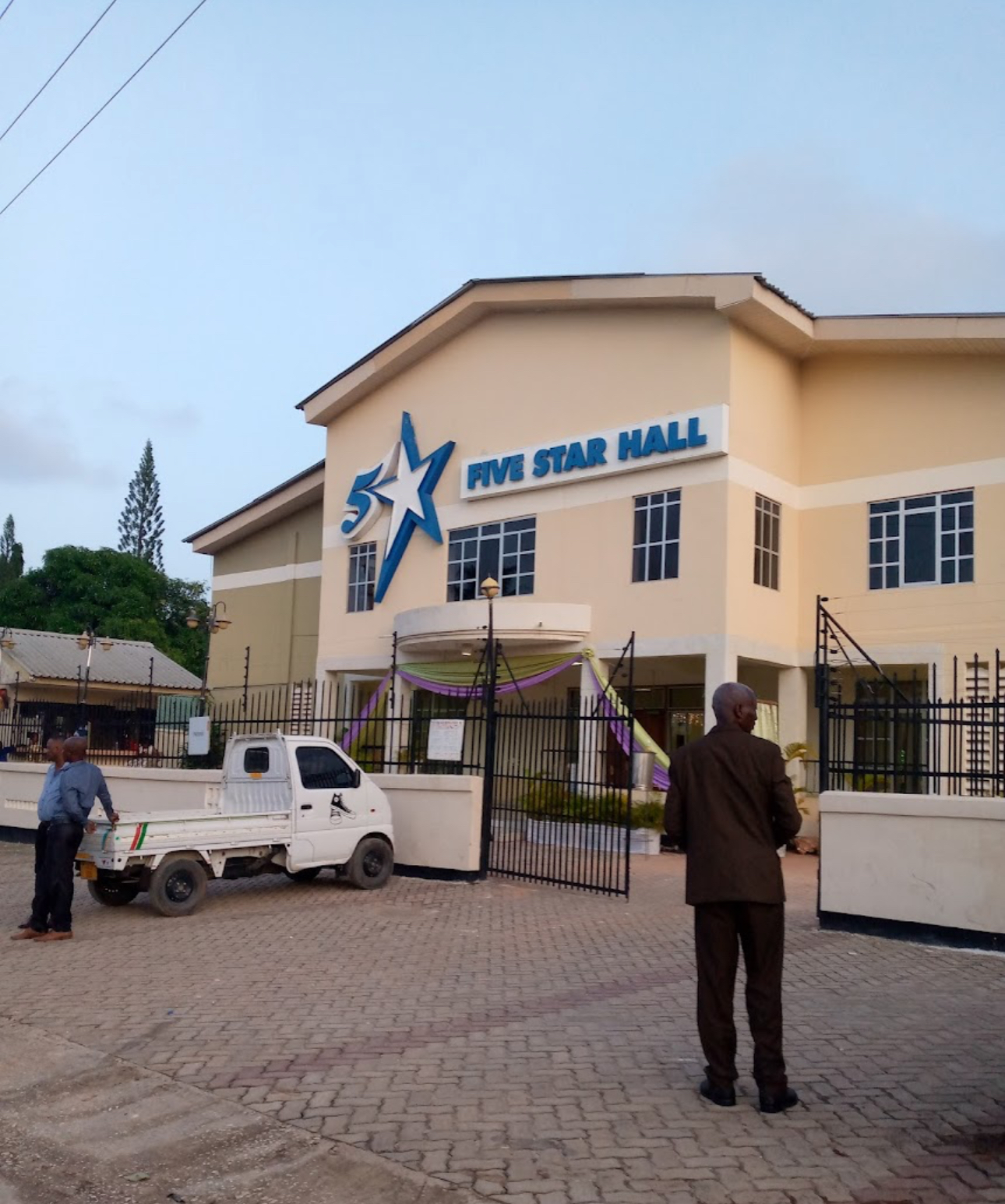
In the luxury residential sector, particularly in Dar es Salaam’s prestigious Masaki and Oysterbay neighborhoods, property management is essentially a hospitality business. Residents in these communities expect more than just a functional apartment; they seek a curated lifestyle characterized by comfort, safety, and community.
Concierge Services as a Lifestyle Upgrade
Apartments with concierge service bring hotel-level amenities to daily life. A property manager in this segment orchestrates a wide array of services :
- 24/7 Security and Greeting: Manned lobbies provide both a welcoming presence and controlled entry for peace of mind.
- Package and Errand Assistance: Handling deliveries, dry cleaning, and even grocery stocking before a resident arrives home.
- Amenity Programming: Actively managing and programming events like wine tastings, fitness classes, and social gatherings to foster a sense of neighborhood.
- Personalized Hospitality: High-end property management often includes “VIP” touches such as personalized welcome gifts and customizable itineraries for short-term guests.
Security Protocols for High-Value Assets
For high-end rentals, security is paramount. Property managers implement comprehensive protocols that include 24-hour surveillance, secure entry systems, and role-based access controls for all property information. The presence of a dedicated security team and regular assessments of emergency preparedness are hallmarks of a 5-star management operation.
Strategic Vetting: How to Choose a Property Management Partner
For property owners at Rent 5 Star Apartments or other luxury developments, selecting the right management partner is a strategic investment decision. The following criteria are essential for evaluating a prospective management firm.
Critical Evaluation Criteria
- Local Market Expertise: The firm must demonstrate in-depth knowledge of the social and economic factors affecting specific neighborhoods like Masaki. This includes understanding high and low seasons for rental demand.
- Fee Transparency and Contract Terms: Owners should demand a full written fee schedule to avoid hidden charges like maintenance markups or administrative fees. It is preferable to work with companies that charge fees based on “rent collected” rather than “rent due” to ensure alignment of interests.
- Responsiveness and Emergency SLA: Testing a manager’s responsiveness before hiring is crucial. A reputable company should have a clear Service Level Agreement (SLA) for handling 24/7 emergencies.
- Reporting and Accounting Technology: Transparency is provided through clear monthly financials and access to an owner portal.
- Tenant Screening Protocol: A rigorous, multi-layered screening process is non-negotiable for minimizing the risk of defaults and damage.
Red Flags to Monitor
- Refusal to provide sample contract pages, invoices, or redacted inspection reports.
- Lack of local references for the specific property type.
- Vague vendor policies or long automatic contract renewals with high penalties.
- No dedicated after-hours emergency contact.
Synthetic Perspective: The Evolving Value of Management
The definition of a property manager has transcended simple oversight. In the modern era, they are asset managers, hospitality professionals, and legal navigators. In a market like Tanzania, where infrastructure projects such as the DART (Bus Rapid Transit) and the Standard Gauge Railway are rapidly shifting property values—often increasing nearby property values by 15% to 25%—the property manager’s role in providing deep market intelligence and strategic positioning becomes even more vital.
As the industry continues to integrate AI and IoT sensors, the standard for “5-star” management will increasingly be defined by a property manager’s ability to provide a frictionless, tech-enabled, and personalized living experience while ensuring rigorous legal and financial compliance. For the property owner, a professional manager is the most effective safeguard against the complexities of the rental market and the surest way to achieve optimal returns on a real estate investment.
By: 5 Star Management, Msikitini Road, Mikocheni B, Dar Es Salaam, Tanzania
~Contact Us Now 255 744 242 222 or 5starapartments2006@gmail.com

Join The Discussion