
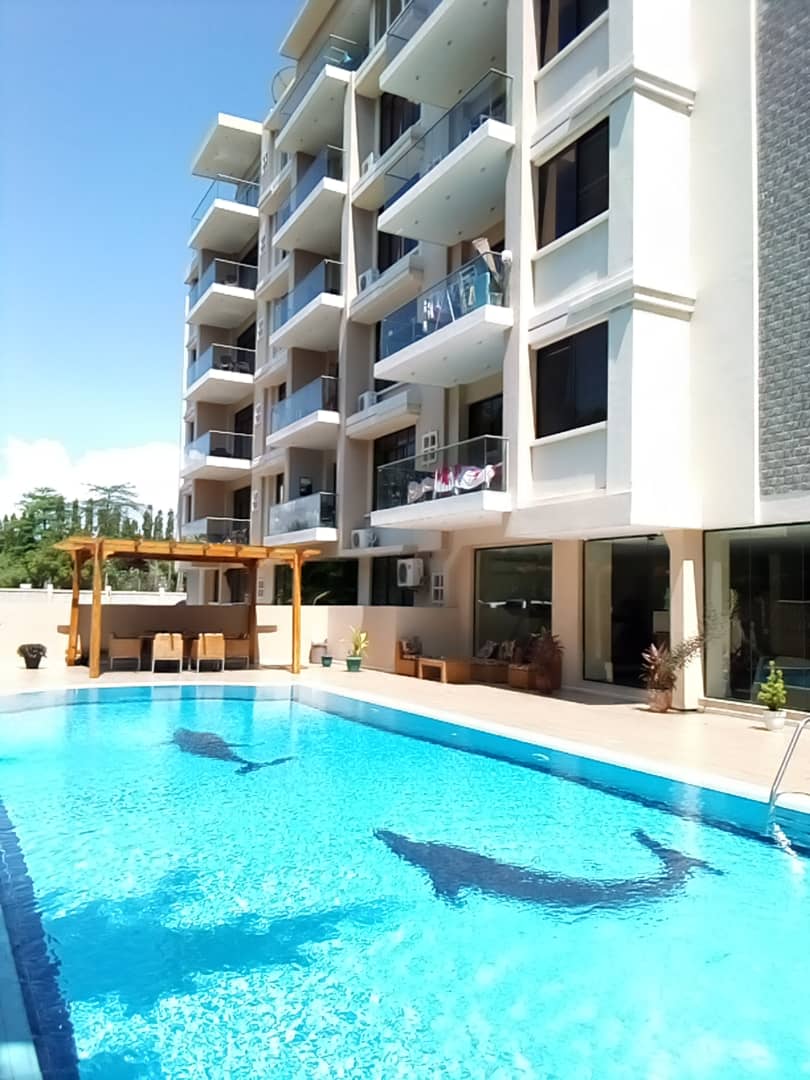
By: 5 Star Apartments Real Estate Editorial | Published on www.rent5starapartments.com
A Warm Welcome to Shared Property Ownership
Stepping into the world of real estate investment is one of the most empowering milestones you can achieve. Whether you are expanding your investment portfolio in Dar es Salaam’s vibrant neighborhoods—from the serene, leafy avenues of Oysterbay and Masaki to the fast-growing commercial hubs of Mbezi Juu—or searching for a permanent family residence, purchasing a home within a shared community is a transformative decision. Unlike owning a standalone, gated villa where every gate hinge, roof leak, and boundary wall rests entirely on your shoulders, buying into a townhome or apartment complex introduces you to a collaborative ecosystem.
Here, privacy meets community, and individual ownership blends with shared responsibility. But transitioning from renting a luxury apartment to owning a slice of a complex requires a shift in perspective. You aren’t just buying four walls and a ceiling; you are buying into a shared financial structure, a governance model, and a lifestyle framework.
In this comprehensive guide brought to you by 5 Star Apartments, we pull back the curtain on what it truly takes to navigate the purchase of a townhome or apartment complex in Tanzania. We will unpack the hidden mechanics of maintenance fees, decode community guidelines, weigh the local pros and cons of townhomes versus apartments (including Tanzanian tax landscapes), and demystify the legal maze of condominium titles and title deeds. Let’s dive in!
1. Demystifying Maintenance Fees: How Shared Upkeep Works
When you own property in a shared complex, you enjoy amenities that would be prohibitively expensive in a standalone home—think pristine swimming pools, guarded security gates, back-up generators for load-shedding resilience, communal water storage tanks, and landscaped gardens. However, these luxuries do not maintain themselves. Enter maintenance fees (often referred to as service charges).
What is a Maintenance Fee?
A maintenance fee is a regular financial contribution levied on all property owners within a complex to cover the operational, administrative, and long-term upkeep of shared common areas and communal infrastructure.
Categorization: Townhomes vs. Apartment Complexes

While both models feature shared contributions, the financial mechanics differ noticeably:
- Apartments (Vertical Shared Units): In an apartment complex, you share a roof, foundation, elevators, stairwells, and vertical plumbing lines. Consequently, maintenance fees here tend to cover heavy structural upkeep. They are categorized into:
- Operational Expenses (OpEx): Daily security guards, garbage collection, cleaning of common stairwells, pool chemical treatment, and electricity for external security lighting.
- Reserve Funds / Capital Expenditures (CapEx): Long-term sinking funds saved specifically for repainting the building exterior every few years, repairing elevators, or servicing the main industrial water booster pumps and backup generators.

- Townhomes (Horizontal Shared Units): Townhomes usually share exterior walls (party walls) and sometimes a roofline, but they often feature small private backyards or individual front porches. Maintenance fees in townhome communities typically focus on exterior building maintenance (roof repairs, exterior painting, gutter clearing) and shared estate amenities (private access roads, perimeter electric fencing, and security gates). Private yard upkeep is usually the individual owner’s responsibility, while common green spaces are managed collectively.
Expert Tip: Always request the last 12 months of the complex’s maintenance ledger and reserve fund balance before purchasing. A low monthly fee might sound attractive, but if the reserve fund is empty when the main water tank fails, you could face a sudden, hefty special assessment levy!
2. Community Guidelines: Living in Harmony Under Agreed Policies
Owning a property in a complex means balancing absolute ownership of your interior space with collective stewardship of the community. Because residents live in close proximity, unregulated behavior can quickly cause friction. This is where Community Guidelines come in.
The Standard Approach to Complex Governance
Standard community guidelines are drafted during the formation of the homeowners’ association (HOA) or management corporation and are legally anchored in your leasehold or master title covenants. They are designed to protect property values, maintain aesthetic harmony, and ensure peace of mind for all residents.
- Notices & Communication: Important announcements—such as scheduled water tank servicing, drainage clearing, electrical maintenance (similar to our Block B Mikocheni maintenance protocols), or upcoming annual general meetings—are distributed via official management notices. Adherence to these notices is mandatory to ensure smooth operations.
- Agreed Pet Controls: Not everyone shares a deep affection for pets. Complexes usually enforce strict pet policies: specifying allowable animal types, maximum weight limits, mandatory leash rules in common areas, and immediate waste cleanup mandates to keep communal lawns sanitary.
- Policies & Lifestyle Standards: Guidelines regulate noise levels during designated quiet hours, vehicle parking allocations (ensuring guests don’t block resident bays), balcony aesthetics (prohibiting unsightly laundry hanging over front-facing railings), and short-term rentals (Airbnb restrictions are increasingly common to protect building security).
These policies are drafted, updated, and approved collectively by landlords and property owners during general meetings. Buying into a complex means agreeing to be both a governor and a governed citizen of that micro-community.
3. Townhomes vs. Apartments in Tanzania: Pros, Cons, and Tax Realities
Choosing between a townhome and an apartment involves weighing lifestyle preferences against financial and tax obligations under Tanzanian jurisdiction.
Townhomes: The Pros & Cons
- Pros:
- Greater privacy with multi-floor living (often 2 to 3 levels) mimicking a standalone house.
- Private outdoor space (small garden or patio).
- No neighbors stomping directly above your ceiling.
- Cons:
- Higher purchase price compared to a single-floor apartment of equivalent square footage.
- You are responsible for interior multi-floor stair maintenance and sometimes immediate structural boundaries.
Apartments: The Pros & Cons
- Pros:
- Generally more affordable entry price point.
- Excellent for locking and leaving (ideal for frequent travelers or rental investments).
- Highly attractive rental yields in prime Dar es Salaam districts like Masaki, Oysterbay, and Mikocheni.
- Cons:
- Less architectural control over exterior modifications.
- Shared noise overhead; neighbor proximity is at its highest.
The Financial & Tax Landscape in Tanzania
When comparing transaction costs and ongoing taxes between property types, keep these Tanzanian regulatory realities in mind:
- Service Charge Payments: Mandatory in both, but apartments often bundle more services (elevators, security, centralized backup power) into a higher monthly fee, whereas townhomes may have leaner association fees.
- Stamp Duty & WHT (Withholding Tax): When purchasing property, Stamp Duty (typically 1% of the appraised value for land/buildings in Tanzania) applies to the transfer of title. If you are leasing out your purchased apartment or townhome commercially, rental income is subject to Tanzanian Withholding Tax (WHT) (usually 10% for residents, deducted by corporate tenants or paid via rental income returns to TRA).
- One-Time Property Taxes: Under local government authorities (such as Kinondoni Municipal Council or Ilala Municipal Council), property tax is assessed annually based on the property’s size, location, and classification, rather than complex variable municipal overheads. Ensuring property tax clearance certificates are up to date is a mandatory step before any property sale is registered at the Ministry of Lands.
4. Condominium Titles & Title Deeds: Complexities, Risks, and Benefits
In Tanzania, the introduction of the Unit Titles Act revolutionized multi-family real estate by making it legally possible to own an individual apartment or townhome within a multi-story building or estate and hold an independent title deed for it. However, navigating condominium titles requires careful legal navigation.
The Benefits
- Absolute Legal Ownership: You hold a true, standalone Certificate of Title (Unit Title) registered under your name at the Land Registry, complete with a proportionate share of the underlying land and common property.
- Bank Financing & Collateral: Because a condominium title is legally recognized as real estate collateral, local commercial banks (such as CRDB Bank PLC) can readily evaluate, appraise, and accept it as security for mortgages or business expansion loans.
- Resale Liquidity: Selling a property with a clean, individual condominium title is infinitely faster and safer than trying to sell a fractional share of a master title.
The Complexities & Risks
- Bureaucratic Delays: Obtaining individual unit titles carved out of a master title can be a notoriously slow process in Tanzania if the original developer did not finalize sectional plans with the Ministry of Lands. Always verify whether the unit title is already issued or merely promised.
- Management Dependency: Your property’s long-term value is tied to the collective health of the management association. If other owners default on their maintenance fees, the entire building’s structural integrity and shared utilities can suffer.
- Legal & Professional Fees: Legal due diligence for condominium purchases requires specialized real estate attorneys to review the master title, zoning compliance, building permits, and the founding affidavit of the management association. Legal fees, valuation fees, and government registration fees can add 2% to 4% to your acquisition costs.
5. Cross-Border Research Methodology: Tanzania vs. Kenya Real Estate Transactions
To provide institutional buyers and individual investors with a rigorous analytical framework, this section establishes a comparative Research Methodology examining transactional differences between Tanzania and Kenya, specifically evaluating townhome vs. apartment complex acquisitions and investor attractions.
Research Design & Empirical Approach
The methodology utilizes a mixed-methods comparative research design, combining quantitative secondary data analysis (property yields, price-per-square-meter indexes, regulatory fee structures) with qualitative primary data (structured interviews with conveyancing lawyers, property developers in Dar es Salaam and Nairobi, and banking executives from tier-1 institutions).
[Secondary Market Data: Yields & Valuations] ──┐
                                               ├──> [Comparative Cross-Border Synthesis]
[Primary Stakeholder Interviews: TZ vs KE]   ──┘           │
                                                           ▼
                                                [Investment Decision Matrix]
Comparative Analysis: Tanzania vs. Kenya Property Markets
| Research Parameter | Tanzania (Dar es Salaam Focus) | Kenya (Nairobi & Mombasa Focus) |
| Legal Framework for Strata | Unit Titles Act (Regulated via Ministry of Lands) | Sectional Properties Act (Updated recently to streamline sub-titles) |
| Foreign Ownership Limits | Restricted to Derivative Rights ( geralmente 33-99 years) unless approved via TIC | Open to foreigners for freehold and leasehold titles with minor commercial caveats |
| Transaction Turnaround Time | 30 to 90 days for title searches and consent to transfer (Kinondoni/Ilala) | 14 to 45 days via digital Lands Titles Registry (Ardhisasa platform) |
| Financing & Mortgages | Conservative LTVs (50%–70%); high interest rates (14%–18% in TZS) | Developed mortgage market and wider availability of developer structured financing |
| Investor Attraction (Townhomes) | High demand among diaspora and corporate executives seeking secure gated communities (Mbezi Juu, Mikocheni) | High uptake in satellite towns (Karen, Athi River, Ruiru) driven by growing middle class |
| Investor Attraction (Apartments) | High rental yields (8%–11% gross) in Masaki and Oysterbay driven by expat housing demand | Massive yield compression in Kilimani and Westlands due to oversupply of 1-bedroom units |
Investor Attractions: Townhomes vs. Apartments in East Africa
- Apartment Complexes (High-Yield Urban Assets): Attract institutional investors and buy-to-let landlords seeking predictable rental streams from young professionals and expatriates. In Tanzania, prime coastal apartments command strong USD-denominated or indexed rents, shielding investors against local currency fluctuations.
- Townhome Estates (Capital Appreciation & End-User Stability): Attract family buyers and long-term wealth preservers. Townhomes appreciate faster in land-value growth because each unit carries a larger apportioned share of the underlying master parcel compared to high-rise vertical apartments.
6. Risk Management Assessment: Red / Amber / Green (RAG) Framework
When evaluating whether to acquire a townhome or an apartment complex, stakeholders must implement a structured risk management matrix. Below is the qualitative Red / Amber / Green (RAG) risk assessment model designed for East African real estate transactions.
                  RISK ASSESSMENT HEATMAP
┌───────────────────────────┬───────────────────────────────────┐
│ RED (High Risk / Severe)  │ • Unverified Master Title         │
│                           │ • Defaulting Management Assoc.    │
├───────────────────────────┼───────────────────────────────────┤
│ AMBER (Moderate Caution)  │ • Currency Volatility (TZS/USD)   │
│                           │ • Delayed Unit Title Issuance     │
├───────────────────────────┼───────────────────────────────────┤
│ GREEN (Low Risk / Stable) │ • Established Gated Townhome      │
│                           │ • Clean Condominium Title (UTA)   │
└───────────────────────────┴───────────────────────────────────┘
Detailed RAG Risk Evaluation Matrix
- Title Deed & Legal Status:
- RED: Acquiring a unit on a disputed master title or relying solely on a sale agreement without Ministry of Lands consent.
- AMBER: Buying an apartment where the individual Unit Title is currently in the processing stage by the developer.
- GREEN: Holding a fully issued, independent Certificate of Title (Unit Title) registered at the Land Registry with zero encumbrances.
- Operational & Maintenance Financial Health:
- RED: Zero reserve fund, high default rates among co-owners on monthly service charges, and failing common infrastructure (lifts, water pumps).
- AMBER: Variable maintenance contributions requiring occasional special assessments for major repairs.
- GREEN: Fully funded sinking fund, transparent 12-month maintenance ledger, and professional facility management.
- Macroeconomic & Currency Exposure:
- RED: Purely local currency income servicing hard-currency denominated mortgage debt without hedging.
- AMBER: Rental yields subject to local inflation and shifting tenant demand across micro-neighborhoods.
- GREEN: Diversified rental income streams with strong tenant retention, indexed leases, and stable asset-backed hedging.
7. Comprehensive Conclusion: Securing Your Real Estate Future
As we draw this exhaustive guide to a close, it is evident that purchasing a townhome or an apartment complex is far more than a simple financial transaction—it is a strategic alignment with long-term urban growth, community governance, and legal structuring. Throughout this exploration, we have traversed the foundational pillars of shared property ownership: from decoding the critical operational mechanics of maintenance fees and honoring community guidelines, to weighing the unique lifestyle and tax realities of townhomes versus vertical apartments in Tanzania.
Furthermore, by examining the legal complexities and undeniable security of condominium titles under the Unit Titles Act, and grounding our analysis in rigorous cross-border research methodology comparing Tanzania and Kenya, we have demonstrated that success in real estate requires thorough due diligence. Whether you are an institutional investor seeking high-yield rental assets in Masaki, a diaspora buyer securing a family townhome in Mbezi Juu, or a portfolio manager analyzing asset-backed debt and equity hybrids, understanding these dynamics shields your capital from unforeseen liabilities.
By deploying proactive risk management strategies—navigating our Red, Amber, and Green assessment frameworks—you ensure that every shilling invested is backed by transparent legal titles, robust maintenance reserves, and verified structural integrity. At 5 Star Apartments, we remain committed to empowering your real estate journey with professional insight, institutional rigor, and unwavering dedication to excellence.
Ready to turn these insights into action? Explore verified, premium townhomes and apartments, review expert property guides, and connect with our advisory team today at www.rent5starapartments.com. Let us help you build a lasting, secure property portfolio in Tanzania!
© 2026 5 Star Apartments Ltd. All rights reserved. Professional Real Estate Advisory, Property Management, & Investment Structuring.

Join The Discussion